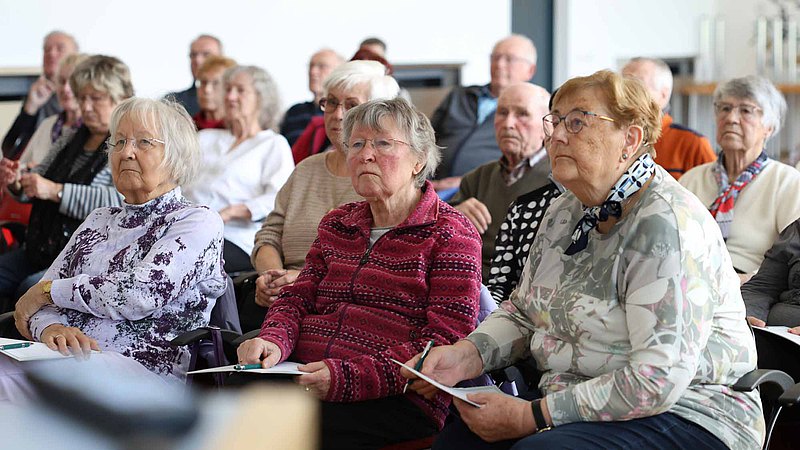
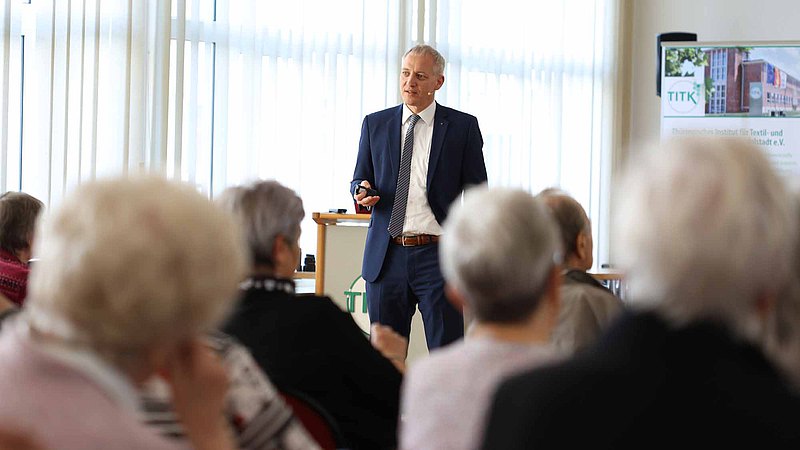
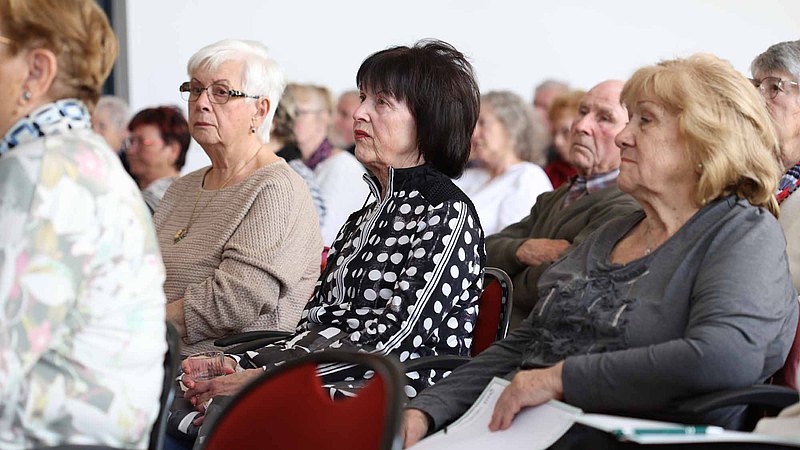
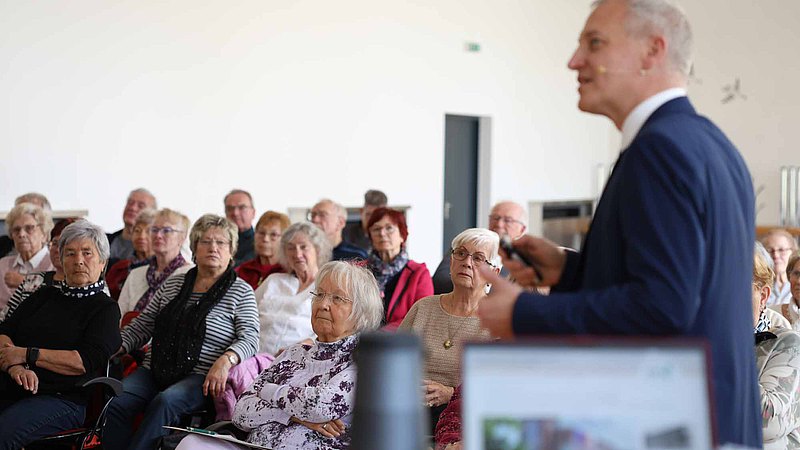
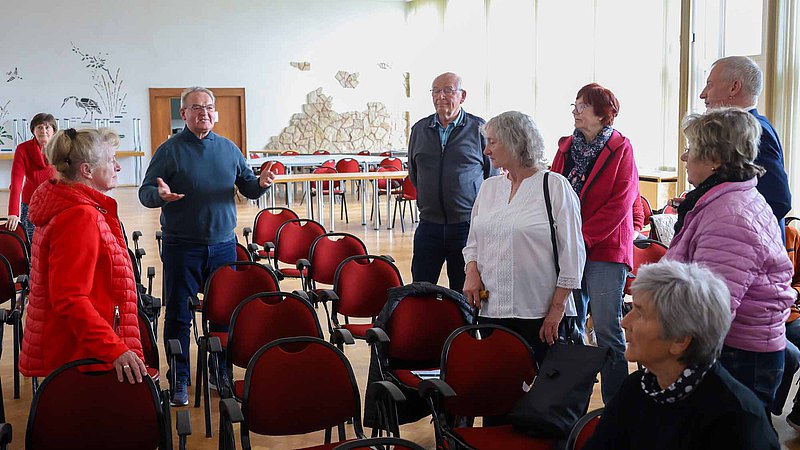
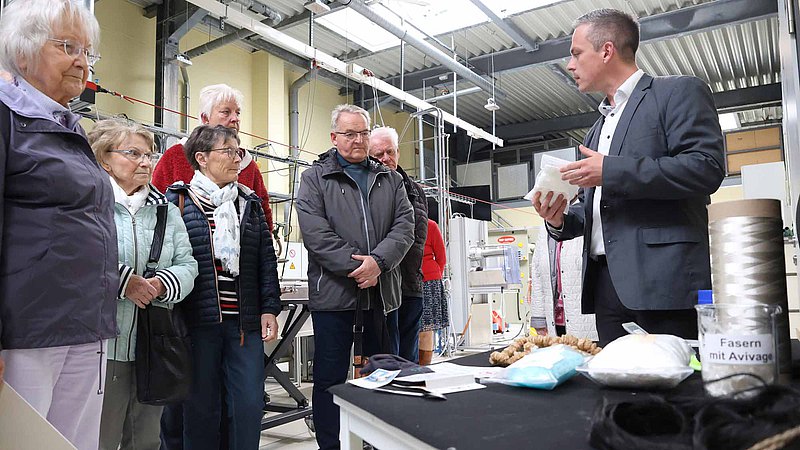
It’s rare to have such a concentration of professional experience and industry expertise visiting at once: Director Benjamin Redlingshöfer welcomed approximately 50 senior citizens - mostly former employees of the Schwarza Chemical Fiber Complex - to the TITK late Tuesday afternoon. The very active Rudolstadt chapter of the Mining, Chemical, and Energy Industrial Union (IG BCE) had requested this brief visit to the historic research institute. “We try to organize a company visit every year,” explained the chapter’s chairman, Norbert Matiss. “The developments at your institute are very interesting and promising. Only through innovation can we successfully shape the future.”
Over the course of a good 45 minutes, the institute director gave the guests an overview of the TITK’s current activities. The institute’s roots date back over 90 years; it was founded in 1954 as the “Institute for Textile Technology of Chemical Fibers” (ITC) and was later incorporated into the CFK as a central research department. In 1991, this evolved into the TITK, the first privately funded, non-profit research institution in the Free State of Thuringia.
Today, TITK, together with its two subsidiaries, OMPG and smartpolymer, employs a total of 200 people, is recognized worldwide, and operates both nationally and internationally. Redlingshöfer covered a wide range of topics, from supporting innovative startups and fostering young talent in STEM fields to establishing business relationships with international partners and TITK’s world premiere at the Expo in Japan last year. Looking at the group’s portfolio, he highlighted, for example, new developments for sustainable vehicle underbodies, the use of recycled carbon fiber scraps, the multi-award-winning bio-hot-melt adhesive Caremelt®, and the functionalized Cell Solution® fibers. “As you can see, we’re making great strides; we’re highly innovative - and you once laid the groundwork for this,” the TITK CEO summarized, addressing his audience.
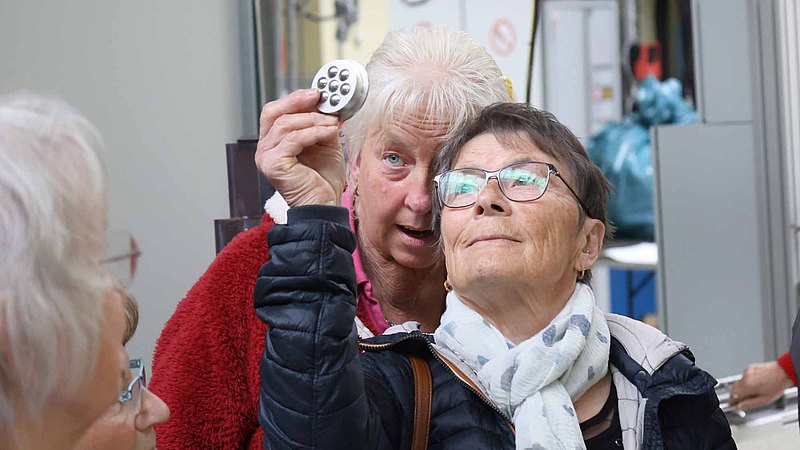
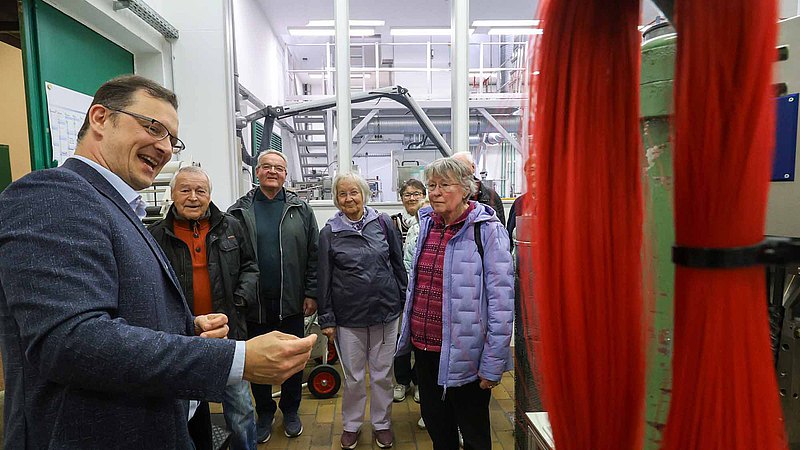
During the subsequent tour of various technical facilities, the senior citizens saw the current state of Lyocell spinning technology, which has even made it possible to develop sustainable and skin-friendly hair extensions based on cellulose fibers. They also saw the modern machines used to produce two- or three-component filaments. Norbert Matiss was particularly impressed here, having worked with the melt-spinning process himself many years ago. “You’ve really refined the process,” he remarked. And Christine Facius, who worked at CFK for 35 years and is now approaching 85, offered a compliment with a wink at the end: “If we were younger, we’d apply for a job here.”